


One of the unique features which adds colour and grace to the Jodhpur city is men wearing turbans that are bright and multihued. Jodhpuri Saafa, known for their beauty, respect and elegance, as its connected with emotions and expressions. These turbans are called by varieties of names depending on cloth colour and design, like multi-coloured Panchrangi Saafa, Chundari, Gajsahi etc.


Jodhpuri Saafa is the most famous and are renowned all more than planet for their styles and models. On 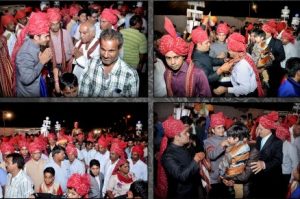

The favoured turban for marriages is the six- to eight-yard long and one-yard wide saafa, while the groom and his close relatives wear the Phenta. The saafa is also worn by royals; for ceremonial occasions, it is the Moliyon.
Wedding Safa and Turban are made in various style and from various cloth like the cotton Kota, Zari, Saturn chiffon, Gata chola, etc and various other things to compliment it, like the gems and jewellery.
While performing पूजा (religious functions) or religious function, males must cover his head. It is a symbol of humility or surrendering to the god by the people.
On different occasions, different types of turbans are used. Plain and muted colour turbans are used during a period of mourning. If a community ostracizes a person then he has to cover his head with a white cloth to inform others about his status.
After the death of family head, there will be a function known as Pagadi Rasam पगड़ी रस्म in which the eldest son wears the Pagadi and takes over the responsibility as the family new head.
There is a custom of exchange of Pagadi between two families as a symbol of close friendship. Turban once knocked over means insult to the person and if someone’s turban is placed at other man’s feet mean complete surrender.
Type of Jodhpuri Saafa Used by Different Caste
Turbans give a snapshot of the person reflecting his caste, profession and many other things. Here is a list of types of turbans used by different caste in Rajasthan.
| Bishnoi community | White |
| Jat community | white |
| Raika community | Red bright turban |
| Langa Kalbeliya | Three colour |
| Rajput | Five coloured |
| Ram Snehi community | White |
| Kabir Community | Red |
| Sanyasi community | Ochre coloured |
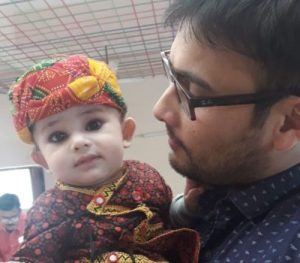

Chudawat Rajputs wrap the Chudawatshahi, and for every region, the Pagadi takes on a new name.
Also keeping the tradition of the turban intact is Mahendra Singh Naggar, director, culture, Mehrangarh Fort in Jodhpur. In his effort to take turban culture to the uninitiated, Naggar has displayed 70 Saafas from his collection of 200 in the fort. But he prefers to tie his own turban rather than have someone else wrap it around him. “There’s a difference between tying a turban on your own head and having it done by someone else. Tying it to your own head brings out your personality,” he said.


